INHEF Special Feature
EmpowerEd: An adventure in capability
One of the most important learnings of the project thus far is the realisation that we need to question our notions of fixed ability and pre-determined ideas of what constitutes success especially in an academic context. While those working in the field would be familiar with such concepts, it is only by engaging with a group of students such as these and witnessing their evolution and progression, that one can fully appreciated the import of such a stance.
Unintended outcomes are common and in fact it is probably better to expect the unexpected. Sometimes what should be apparent and simple, proved complex and at other times, students exhibited familiarity, knowledge and understanding that would not generally be expected of any first-year student.
The importance of allowing time became evident in the early stages of the pilot. Time to process, time to assimilate, time to make sense of something, time to formulate a response, time to acclimatise and get in the moment or the space. Students automatically take this time. As educators, we are learning to allow ourselves to give this time.
Learning can be fun and this is something we are rediscovering with these students. Engaging in a playful way with material is effective, enjoyable and enhances memorisation and internalisation of learning. This often requires a multi-modal approach where students choose their preferred media or means of communication.
An important learning has been that we need to remain open to looking at learning in new ways, listening and really engaging with learners, respecting their preferences and choices, trusting them to want the best for themselves. This can be done most effectively where a strong positive relationship has been fostered between learners and educators. The project has highlighted the importance of the affective domain, something often neglected in higher education. The affective domain (Krathwohl, Bloom and Masia, 1964) refers to students’ emotions, feelings, values etc. and during the project discovered that these are closely aligned to motivation and success.
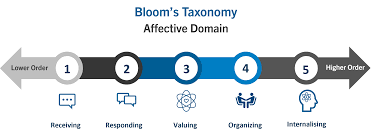
Figure 1. Bloom's Taxonomy
It may be better to consider the traditional ability-disability dichotomy as more of a duality, and in the context of Path 4, a new focus on capability provides new opportunities. The Path 4 pilot is an example of an approach where new capabilities are discovered and nurtured through the provision of adequate supports and an appropriate learning environment.
Lack of flexibility and agility of HE systems has at times proved challenging and while resources and supports are generous, they have not always been available in a timely manner. These challenges have been somewhat offset by good will and resilience. The real compensation has been the privilege to share a learning journey with a group of students who would otherwise not have benefited from a higher education opportunity, an opportunity that many of us may take for granted.
References
Bloom’s Taxonomy (n.d.) [Online]. Available at https://ecampusontario.pressbooks.pub/nccoursedevelopmentguidealpha/chapter/blooms-taxonomy/ (Accessed 21 January 2026)
Krathwohl D. R., Bloom B. S. and Masia B. B. (1964). Taxonomy of educational objectives. London: Longman.


